Bohernabreena Invasive Species Management
Uisce Éireann is managing invasive species at Bohernabreena Reservoir in County Dublin. A survey of the site recorded Japanese knotweed, rhododendron and skunk cabbage, which led to the commencement of an intensive treatment programme to manage and control these invasive species. The results of this invasive species management have shown a considerable reduction in these invasive species at the site which has had a positive impact on the biodiversity at Bohernabreena Reservoir.
Bohernabreena Reservoir is located in County Dublin, to the south-west of Firhouse, within Glenasmole Valley. In 2018 a survey of invasive plant species at the reservoir recorded Japanese knotweed, Rhododendron and Skunk cabbage. During the 2018 survey 82 subsites of Japanese knotweed were identified. A treatment programme to manage and control Japanese knotweed at the reservoir commenced in late 2019. Since then, comprehensive bi-annual treatments have been carried out and are on-going. Substantial results have been seen as a result of the consistent and on-going treatment programme.
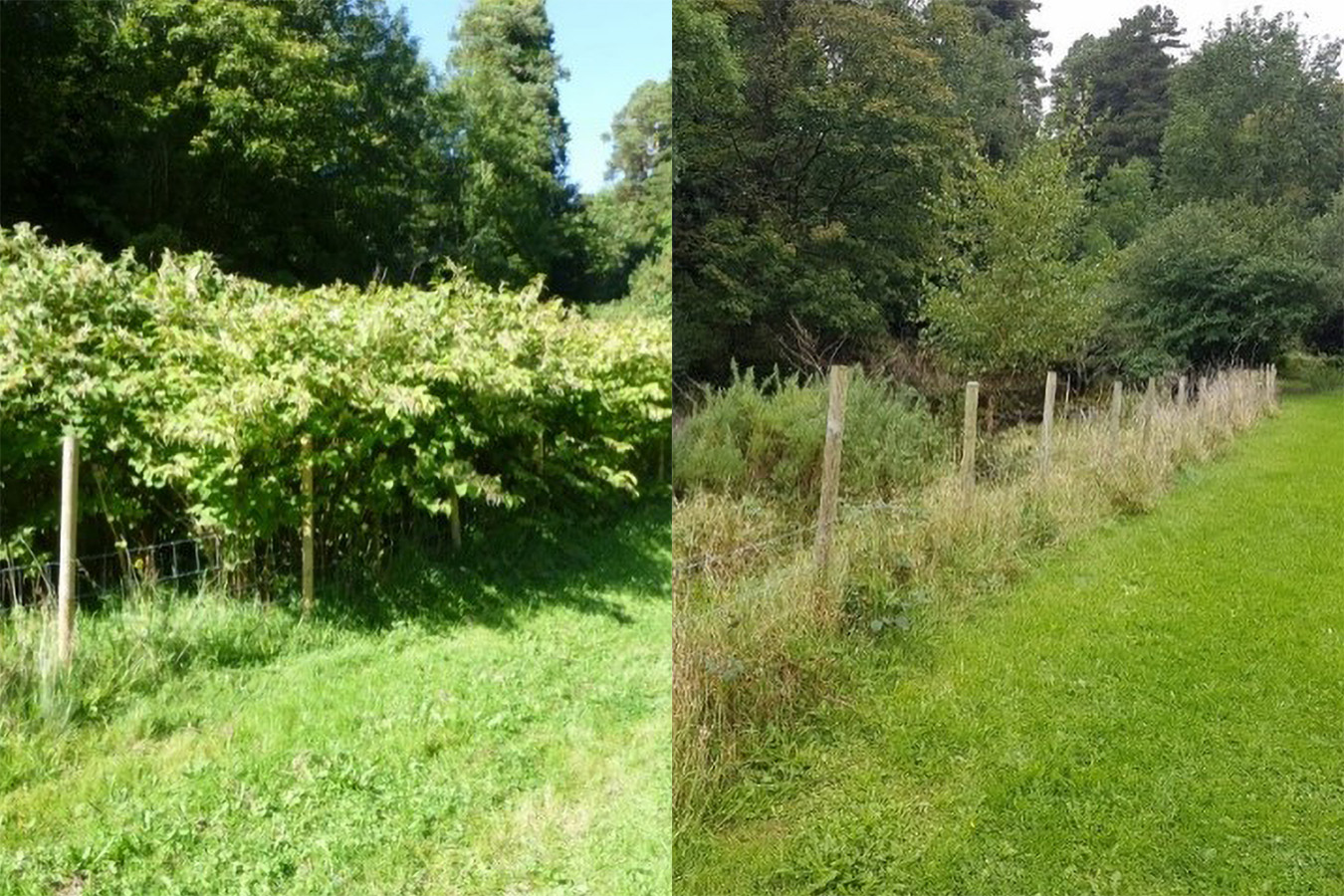
Results after 6 full treatments showed a 96.5% reduction in Japanese Knotweed presenting across the 82 originally identified subsites. These results show a considerable reduction in both the distribution and condition of remaining Japanese knotweed stands within Bohernabreena Reservoir. The images below show the reduction in Japanese Knotweed along the riverbank between 2019 and 2022. The treatment programme will continue and the management of invasive species also encompassed Rhododendron and Skunk cabbage from 2024 onwards. The treatment and management of invasive species at the reservoir will have very positive impacts on biodiversity, eliminate the risk that such species pose to the integrity of the dam structures, and will benefit operational activities and capital investment works in the future.